WHAT WE HEARD AT IACAC PITTSBURGH: FIVE CONVERSATIONS THAT WILL SHAPE INTERNATIONAL RECRUITMENT
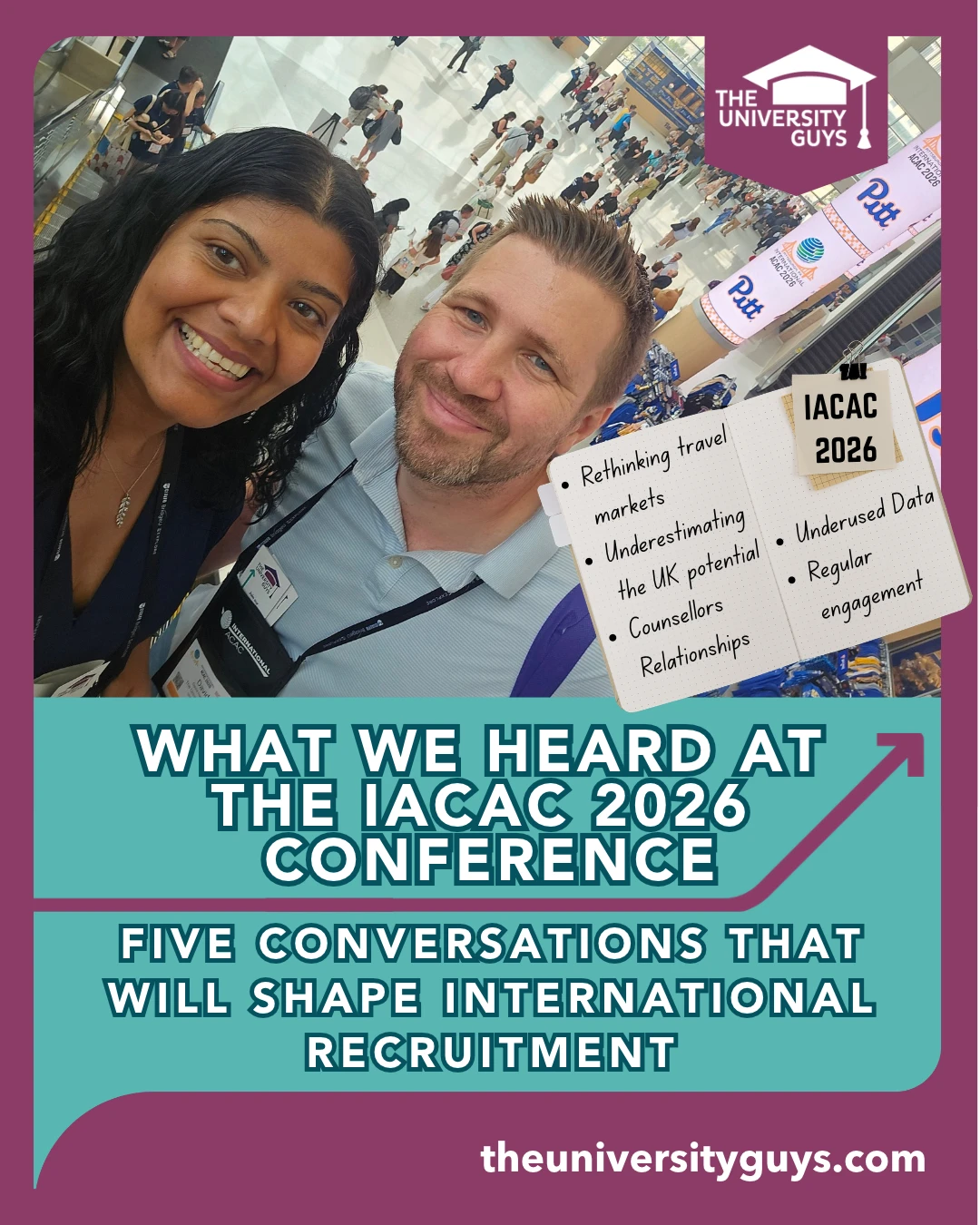
David Hawkins and Sheena Mehta reflect on three days in Pittsburgh and what the conversations told us about where international university recruitment is heading.
Every year, the International ACAC conference reminds us why relationships are the foundation of this profession. This year, hosted across Carnegie Mellon and the University of Pittsburgh, the sessions were excellent, but as always, the most useful conversations happened on the walks between campuses, over dinner, and in the corridors between sessions.
We came back from Pittsburgh with five things on our minds. They are connected, and they all point in the same direction.
1. Universities are rethinking what recruitment travel is actually for
The conversation came up repeatedly, in different forms, with different institutions. Travel budgets have been under pressure for several years. The rise in costs, combined with declining yield from broad-brush recruitment fairs, has forced a genuine rethink about what international travel is supposed to achieve. This is not a new insight. But it was striking how many conversations at Pittsburgh converged on it.
2. The UK independent school sector is not what most international universities think it is
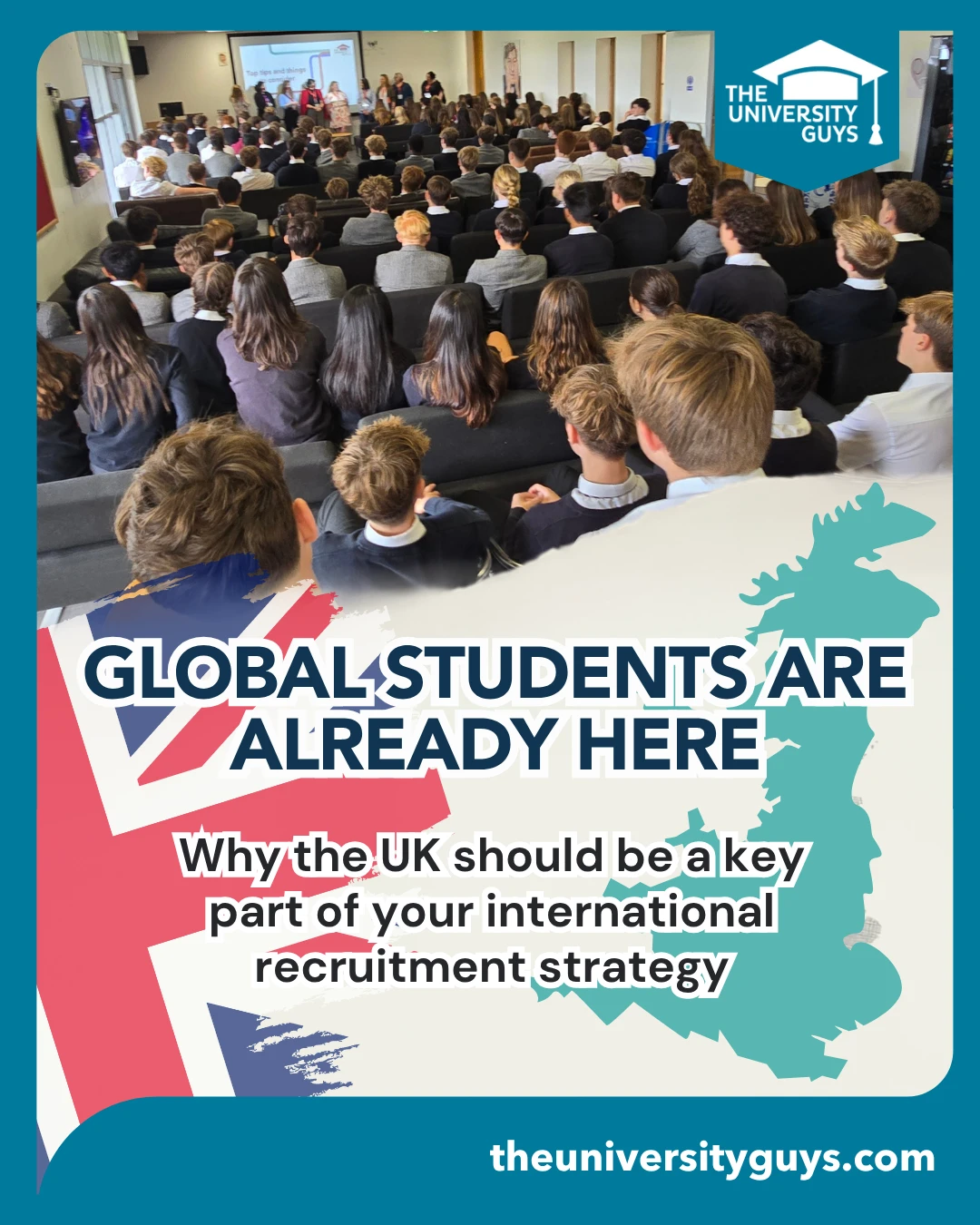
The ISC Census 2026, published this summer, contains a number: 57,214 non-UK pupils currently studying in UK independent schools. That is 10.9% of the entire ISC pupil population.
A further 42.2% of ISC pupils are from minority ethnic backgrounds.
Mainland China is the largest source of overseas-parent pupils, with 5,576 students. Hong Kong contributes another 3,620. But the picture is genuinely global: pupils from Germany (1,959 with parents overseas), Spain (1,008), the Middle East (682), Central and South America (671), Nigeria (536), Thailand (575), and 29 other country groups, all studying in UK boarding and day schools right now.
When we make this point to university representatives – that visiting a single UK independent school can put them in front of students from fifteen or twenty countries – the reaction is almost always the same. They had not thought about it in those terms.
UK independent schools are not a domestic market. They are a global recruitment hub, with the logistics and language barriers already solved.
3. The counsellor relationship is everything
One of the most important insights was the evolving role of the school counsellor in the recruitment pipeline. The dynamic is different on each side of the desk, but the fundamental truth is the same: the counsellor is the person the family trusts, and the university that has a genuine relationship with the counsellor is the one that gets recommended. The universities in our roadshows who see the strongest yield are the ones who return year after year. The relationship compounds.
4. The data on international mobility from UK schools is striking – and underused
ISC pupils attend a wide range of overseas institutions. In 2012, fewer than 400 institutions attracted ISC pupils; this has since risen to 635, of which 274 are located in the USA.
Pupils choosing to study overseas are not confined to a small number of ISC schools: 59.2% of ISC schools with Year 13 leavers send at least one pupil to higher education outside the UK. In six out of ten UK independent schools which went up to age 18, at least one student last year chose to attend a university beyond the UK.
The USA remains by far the most popular destination, accounting for 48.1% of ISC pupils attending non-UK universities. Spain is second at 8%. IE University in Madrid is now the single most commonly attended non-UK institution for ISC leavers. Bocconi ties with the University of Chicago.
These numbers tell a story about a student population that is genuinely considering the world. The institutions that are present in these schools – known to the counsellors, familiar to the students – are the ones benefiting from that openness. The institutions that are not present are invisible to families who are, in many cases, perfectly open to them.
5. The conversation that stayed with us longest
It happened at the dinner we hosted; bringing together a mix of people around the table: past presidents of IACAC, university representatives from North America and Europe, counsellors early in their careers and late in them. It was a great evening of excellent conversations. The one that stayed with us came from one of the attendees who has been in this field longest, that But the answer that stayed with us came from one of the people who has been in this field longest: that what does not change is that this work runs on trust, and trust is built the same way it has always been built – by showing up, by being honest, and by caring about what actually happens to the students.
That is as true for university recruitment as it is for counselling. The institutions that build genuine relationships with UK school counsellors – that invest in being present, in being known, in being trusted – are the ones that will recruit well from this sector over the long term.
The ones that don’t will find the door has quietly closed.
Explore More Insights
Discover more articles, insights and resources from The University Guys covering international student recruitment, UK schools and higher education.